Infrastructure for Resilience: Disaster Relief Mediation
8.14.2025
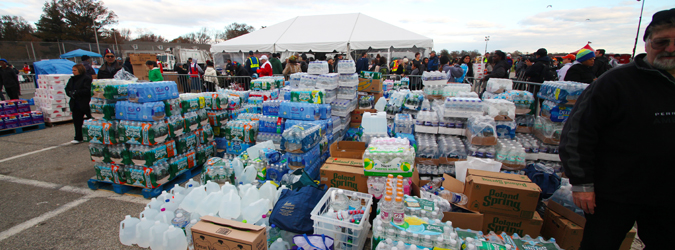
It seems you cannot listen to the news these days without hearing about a devastating flood, fire, hurricane, or other natural disaster. In the aftermath of disasters, the path to recovery is often fraught with legal, financial, and emotional obstacles. Among the most pressing challenges for affected individuals and communities are disputes related to insurance claims and access to timely remedies. Mediation has and continues to play a unique role in advancing critical access to dispute resolution following a disaster.
The American Arbitration Association has supported states nationwide by administering structured disaster relief mediation programs to promote equitable dispute resolution outside the traditional judicial system. These programs reflect a growing recognition that mediation, particularly when embedded in public policy frameworks, can significantly alleviate the burden on courts, accelerate the disbursement of critical resources, and restore public confidence in institutions during moments of crisis.
Case Studies: State-Specific Models and Successes
The establishment and administration of disaster mediation programs are grounded in legal authority and state-specific regulatory frameworks. For instance, North Carolina’s ongoing disaster mediation program is codified in North Carolina General Statutes Sections 58-44-70 to 58-44-120. The law authorizes the North Carolina Department of Insurance to coordinate with an approved mediation organization, in this case, the American Arbitration Association, to offer mediation to first-party insurance claimants after a disaster declaration. Participation by insurers is mandatory when a consumer elects to mediate, creating a balanced process that provides access to a meaningful remedy while enabling insurers to manage high claim volumes efficiently.[1]
In the aftermath of Superstorm Sandy in 2012, New York and New Jersey implemented parallel mediation initiatives to address a surge in homeowner and business insurance disputes. In New York, the Department of Financial Services issued an emergency regulation creating a voluntary mediation program for policyholders disputing insurers’ decisions. While homeowners could opt into the program, participation became mandatory for insurers once the policyholder elected mediation. The AAA administered this program, which focused on residential property loss claims and emphasized informal, expedited resolution. New Jersey’s Department of Banking and Insurance launched a comparable program administered by the AAA. Businesses could also opt into mediation programs to help insurers address disputes faster.
Similarly, on Dec. 20, 2005, Mississippi promulgated Emergency Rule 2005-2, and on Dec. 22, 2005, Louisiana promulgated Emergency Rule 22; both rules established a hurricane mediation program. The regulations designated the AAA as the administering body and outlined a process by which homeowners could request mediation of unresolved claims. This regulatory framework, published on Oct. 5, 2005, provided precise procedural requirements and timelines that balanced consumer rights with insurer obligations. The program’s clarity and accessibility helped thousands of residents secure faster claim resolutions and avoid protracted litigation.[2]
Hurricanes Katrina and Rita were not the first to utilize AAA-administered mediation. Hurricane Andrew hit Florida on Aug. 24, 1992. In response, on Nov. 5, 1992, Florida’s Department of Insurance promulgated Emergency Rule 4ER92-17 with the AAA designated as the program’s administrator in conjunction with the Florida legislature.
Blueprint for Building Effective Disaster Mediation Programs
Given the prevalence of disaster relief mediation programs throughout the years, there are different models to look at, and the AAA works with departments of insurance and other stakeholders to provide educational resources for best practice drafting when considering program parameters. While each state implemented its disaster relief mediation program in its own way, reviewing them together, while not an exhaustive list, the following are the best practice provisions that will aid in setting up a successful program.
Purpose and Scope
- Trigger Conditions: Mediation is activated after a formal disaster declaration by the governor or president and an order from the insurance commissioner, obviating the need for legislation or emergency regulation to be passed after each disaster.
- Targeted Claims: Clearly define the types of claims the program covers.
- Administrative Expertise: Allow the appointment of an external administrator.
Definitions
- Clear Criteria for Eligibility: Define a “disputed claim,” e.g., must involve a minimum threshold of $1,500 and cannot involve fraud or complete coverage denials.
- Neutral Facilitator: Mediators must be impartial and distinct from insurers.
- Scope of Mediation: Define the scope of what is to be mediated.
Notification of Right To Mediate
- Timely and Transparent Notice: Provide how insurers will notify the insured of their right to mediation, e.g., insurers must notify policyholders of their right to mediate within five days of a dispute or denial.
- Standardized Communication: Detail information on what the notice must provide, e.g., the notice must be in 12-point font, with prescribed language explaining the law and the mediation process.
- Consumer Access: Must include clear instructions for initiating mediation and contacts for the mediation administrator.
Request for Mediation
- Defined Timeframe: For example, policyholders have 60 days post-denial to request mediation.
- Detailed Intake: Delineate what a request for mediation must include.
Mediation Fees
- Insurer-Funded Mediation: Provide that the insurer bears the cost of mediation and administrative fees, ensuring access is not limited by a claimant’s resources. Fee schedules are generally set through an request for proposal process in collaboration between the department of insurance and the vendor who will be administering the program.
Appointment, Scheduling, and Mediator Qualification
- Mediators Appointed and Centralized Scheduling: The administrator selects a mediator and schedules the session; this helps with the efficiency and speed of the process.
- Mediator Qualifications: Provide what qualifications mediators must have to service the program mediations to ensure professional standards and public trust.
Conduct of the Mediation Conference
- Participation Requirements: The insurer must send a knowledgeable representative with full settlement authority and the complete file, and the insured must be present.
- Confidentiality and Ethics: Proceedings are confidential and provide which mediator professional conduct rules the mediators must follow, e.g., Model Standards of Conduct for Mediators.
- Virtual Mediation: Provide that mediation will take place virtually, taking advantage of the efficiency and cost savings of remote mediation.
Post-Mediation
- Reporting Requirements: If the program requires a mediator’s report, provide details of what will be included to avoid compromising mediation confidentiality.
- Settlement Terms: If desired, include a short period under what circumstances and within what timeframe a party can rescind a mediated settlement, e.g., within three days.
- Legal Finality: Settlements cover only claims raised during mediation, protecting the right to bring new claims separately.
- Alternative Remedies: Parties may still pursue appraisal, litigation, or other dispute resolution if mediation fails or is declined.
The Numbers Behind the Impact
Statistical outcomes from these programs validate their impact. In Louisiana and Mississippi following Katrina and Rita, more than 17,800 claims were mediated with a 76% resolution rate. The AAA administrated over 2,500 mediations in Florida after Hurricane Andrew, and the resolution rate exceeded 90%. In the Sandy-related programs, success rates ranged between 63% and 67%, depending on jurisdiction.
These figures are not merely administrative metrics; they reflect real-world impacts. Families can begin rebuilding, caseloads in overburdened court systems are reduced, and relations between policyholders and insurers are improved. Importantly, these initiatives model how private sector expertise can support public goals when carefully integrated into emergency management infrastructure. Even for those mediations where no settlement was reached, each mediation held was an opportunity for the homeowner and insurance representative to share information and have a frank conversation about the applicable policy and potential hurdles to recovery.
Mediation as Infrastructure for Resilience
The best time to plan is before the disaster hits. North Carolina’s program is an excellent example of proactive planning. Its mediation program kicks in if a state of disaster has been proclaimed by the governor, a resolution of the General Assembly, the president of the United States, or if the insurance commissioner issues an order establishing the mediation procedures are in effect. By having mediation procedures set up and ready to be activated, North Carolina does not need disaster-by-disaster enabling statutes passed by the state Legislature or emergency rules declared by the state’s Department of Insurance.
These disaster relief mediation programs have set a benchmark for how alternative dispute resolution can be mobilized as a public service tool. These programs demonstrate the value of public-private collaboration, the importance of legal frameworks in shaping effective responses, and the ongoing potential of mediation to restore stability, fairness, and trust in times of uncertainty. As natural disasters continue to occur with growing regularity, these programs take on enhanced importance and value.
Tracey B. Frisch is the division vice president for mediation at the American Arbitration Association-International Centre for Dispute Resolution and is the executive director of the AAA-ICDR Foundation, having served previously as the AAA-ICDR’s associate general counsel. Frisch serves on the Part 137 attorney/client fee dispute pro bono mediation panel and is a New York State-certified community mediator. This article appears in a forthcoming issue of NY Dispute Resolution Lawyer, the publication of the Dispute Resolution Section. For more information, please visit nysba.org/drs.
[1] For more information about the North Carolina Disaster Relief Mediation Program see the AAA’s website: https://www.adr.org/special-services/north-carolina-disaster-mediation-program/ and NC Dept. of Insurance website: https://www.ncdoi.gov/consumers/disaster/after-storm/disaster-mediation#Whichclaimsareeligibleformediation-783.
[2] For more information about the Mississippi and Louisiana programs, see Susan Zuckerman, Mediation Program Helps Miss. and LA. Rebuild After Katrina and Rita, Disp. Resol. J. vol. 61,12, 13 (2006).