Horseshoe Crab Harvesting Will Soon Be Banned in New York
3.12.2026
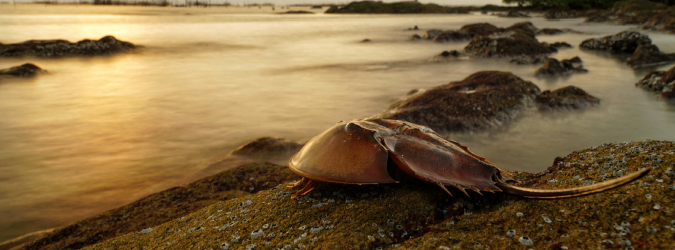
By 2029, New York State will completely ban horseshoe crab harvesting, making it the third state to do so after Connecticut and New Jersey. This represents a massive achievement for environmental groups and a model for future conservation efforts.
A continuing legal education course explained the significance of horseshoe crabs and what people should know about ongoing efforts to protect the species.
The speakers, both from the Center for Biological Diversity, were Will Harlan, southeast director and senior scientist, and Danny Waltz, southeast senior attorney.
The Significance of Horseshoe Crabs
“I am excited to talk about this phenomenal species – the American horseshoe crab,” said Harlan. “It is one of the most ancient animals on the planet. It’s been around since the Ordovician period, when there were only two continents in the world. It has survived mass extinctions, ice ages, volcanic eruptions, the meteor impact that wiped out the dinosaurs. This creature has persisted.”
The horseshoe crab is called a “living fossil” because it has barely changed since it first appeared 450 million years ago. Its habitat extends from Maine to Louisiana on the east coast.
Horseshoe crabs are critical to the ecosystem. Red knots, a migratory shorebird, stop and eat horseshoe crab eggs while making their journey from the tip of South America to the Arctic. Red knots are listed as an endangered species because horseshoe crabs are also under threat.
The horseshoe crab population has sharply declined due to overharvesting for use as bait and in biomedical research. Horseshoe crabs have unique blue blood that makes it ideal to test vaccines, drugs and medical devices.
“That blood has saved countless human lives,” Harlan said. “So, we are deeply indebted to this prehistoric ability of horseshoe crabs to immediately detect pathogens, invaders, and endotoxins. We use that to protect human health. The good news is that we now have a synthetic alternative.”
A Full Ban by 2029
Gov. Kathy Hochul signed the bill in December 2025, adding a three-year phaseout period so that the harvest will be reduced by 25% each year until it is fully banned in 2029.
“It’s a remarkable accomplishment that only happened because of sustained public pressure,” said Harlan. “It’s a testament to the dedication of the assemblymembers and the folks in New York who, just through grit and dedication, kept this bill alive for two years and ultimately prevailed in convincing Gov. Hochul that they weren’t going to go away. And their persistence finally paid off.”
The speakers noted while the phaseout process could encourage industries to find alternatives instead of harvesting horseshoe crabs, there are concerns that it might have the opposite effect.
“There are conservation downsides to phaseouts,” Waltz said. “This might give industry an incentive to take as many horseshoe crabs as they possibly can… without having any concern for how it might remain sustainable. We’re taking away any reason for the industry to want sustainability, knowing that by 2029, they won’t have any opportunity for harvesting.”
Waltz also said that a ban in one state could increase the harvest in other states.
“Finally, we should continue with public education and generally make people aware of the wonders that are part of the ‘living fossil’ – horseshoe crabs,” Waltz said. “I’m hoping we took advantage of that opportunity to add to the public education today.”
This webinar was sponsored by the New York State Bar Association’s Government Relations Department and the Committee on Animals and the Law. View the full program here.