Arab Lawyers in the Middle East Discuss Arbitration, Collaboration and Gender Roles in NYSBA Program
3.30.2026
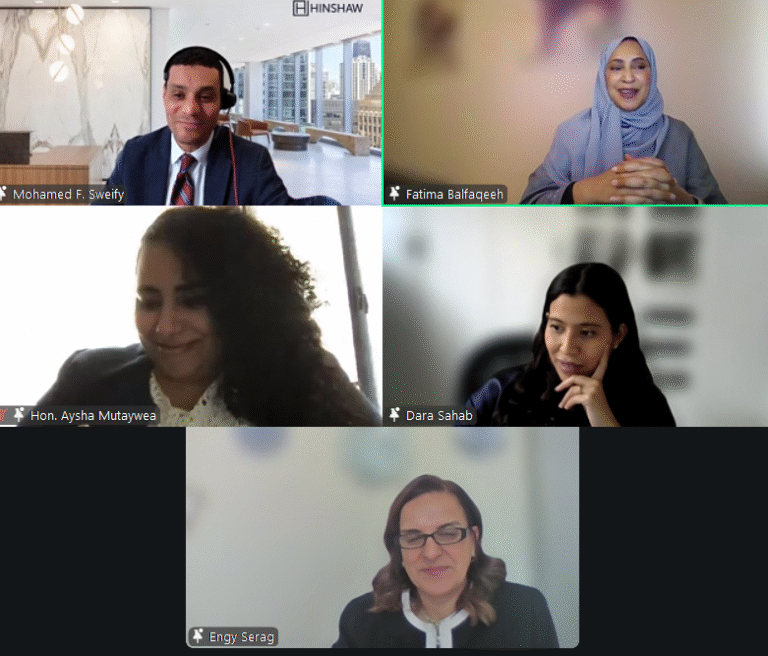
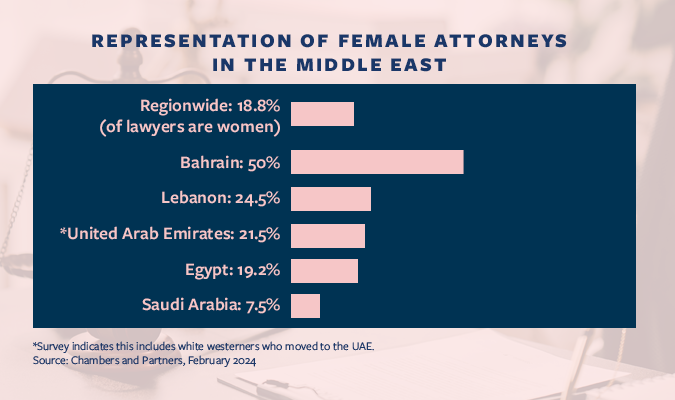
In recognition of women’s history month, the New York State Bar Association’s International Section and Women in Law Section teamed up to sponsor an informational program highlighting the impact of Arab women in the legal profession in the Arab Middle East.
The program “Voices of Impact: Arab Leading Women Driving Change in the Arab Middle East,” brought together practitioners and judges from Bahrain, Saudi Arabia, Egypt and the United Arab Emirates. During the 90-minute program, the women shared insights on their work and career paths. The program was moderated by Mohamed Sweify of Hinshaw and Culbertson, chair of the International Section’s Egypt chapter.
Each of the four panelists followed very different paths that led them to international law and arbitration. Some started in other fields such as international business or engineering and then pursued a law degree, while others started as paralegals or in litigation and then moved into arbitration.
Engy Serag, the executive director of commercial contracts and operations at Orascom Construction in Egypt started her career in construction as an engineer. Yearning for a better understanding of the claims process in her industry led her to pursue both a doctorate and an LLM degree. Now she supervises more than 260 people at Orascom.
“I wanted to get the process technically correct, which is where I am right now in our industry in North African construction,” she said.
Judge Aysha Mutaywea of the Bahrain International Criminal Court started her legal career in litigation but soon grew restless and looked for other opportunities.
“I love arbitration because it opened the world for me. I was exposed to so many nationalities, so many laws and experiences. Sometimes opportunities come to you and sometimes you have to create your own,” she said.
One of the self-created opportunities came at the International Court of Arbitration, a leader in international dispute resolution for over 100 years. Mutaywea recalled how she and fellow panelist attorney Fatima Balfaqeeh petitioned the court in Paris to admit them to the pool of arbitrators, which they thought had too few female members. Just two weeks later, Mutaywea was appointed to the court. After serving two terms, she was appointed to a judgeship with the International Commercial Court in Bahrain.
“We did not follow a path; we made our own path. Choose the path that works for you,” she advised. “I feel fortunate to have options in the work I do. It is a small legal universe we find ourselves in.”
The panelists were questioned on navigating the tension between short term pressures and achieving long term goals in arbitration and mediation.
Balfaqeeh, an independent arbitrator in the United Arab Emirates, conceded that short term pressure is real and can affect your perception in a dispute. Acknowledge the pressure but do not succumb to it, she said.
“I take my time, step back and look at every situation as an opportunity. Stay true to yourself. Integrity cannot be faked,” she warns. “Clients see it, parties see it. If you have integrity, they will appreciate that and not feel that [a decision] was unfair. If you are morally compromised, you cannot fix it very easily.”
Dara Sahab, deputy chief of ADR for the Saudi Center for Commercial Arbitration, was asked how she leads a multi-cultural team that handles disputes from diverse cultural backgrounds.
“You have to earn trust from everyone in that process,” she said. “I learned that there is not one right way of doing things. Having an open mind is very important.”
Several panelists shared how they experienced gender discrimination and contempt for women in leadership roles. Balfaqeeh recounted how she skillfully replied to a male client who asked who is raising her children while she is at work.
“I will ask them how they feel as a busy working father. How does it burden them? The answers given from these men are heartbreaking,” she said. “We will stop talking about gender roles when everyone has the freedom to choose the career they want without judgment or without questioning.”
Advice for Female Attorneys
The program ended with a lightning round of pithy advice from each panelist for women early in their careers:
- Fatima Balfaqeeh: Stay curious, persevere and keep working on your skills.
- Engy Serag: Create your own seat at the table with integrity and trust.
- Judge Aysha Mutaywea: Work on yourself so that you are technically brilliant and no one can question the merit.
- Dara Sahab: Don’t be afraid to pursue what you want without hesitation.
Copy Direct Link
Source Copy Link