Scaling Back DEI Has Chilling Effect on LGBTQ+ Attorneys
1.23.2026
How are federal executive orders limiting diversity, equity, and inclusion initiatives affecting LGBTQ+ attorneys?
A seminar hosted by the New York State Bar Association’s LGBTQ+ Law Section delved into this question, as well as how LGBTQ+ attorneys can navigate this changed environment.
The speakers were:
- Dena DeFazio, counsel at Barclay Damon.
- Louis DiLorenzo, co-managing member at Bond, Schoeneck & King.
- Nic Rangel, executive director of the Legal Aid Society of Northeastern New York.
- Kerri Wright, principal at Porizo, Bromberg & Newman.
Last year, President Donald Trump released a series of executive orders. One ended affirmative action requirements for federal contractors. Another required all federal agencies to identify and stop DEI practices within 120 days. A third withdrew federal recognition for transgender people and ended federal funding for gender-affirming care.
In addition, the U.S. Supreme Court ruled in 2023 that race-conscious admissions policies are unconstitutional in Students for Fair Admissions, Inc. v. President and Fellows of Harvard College and Students for Fair Admissions, Inc. v. University of North Carolina.
“We know that firms and employers are reassessing their DEI commitments amid various sources of pressure,” said Rangel. “But we also know that while there have been changes in litigation trends, there’s not been changes to state or federal law. Also, the state of New York protects protected traits and characteristics at a much higher standard than the federal government requires – many of our protections have been ratified in our state Constitution. Nonetheless, LGBTQ+ attorneys face workplace implications – whether it’s discrimination or perceived lack of support, integration and inclusion into those policies and decisions.”
Due to this and from threats from the federal government, workplaces have limited or ended diversity initiatives, such as fellowships, pipeline programs and employee resource groups – programs that are seen as giving preference to specific groups of people. Some firms are continuing their DEI commitments but are evaluating them to ensure that they comply with federal directives – for example, making sure that affinity groups are open to everyone.
“I think a lot of firms are looking at, ‘What culture do we want, and how do we maintain that culture while ensuring that we’re legally compliant?’” said Wright.
Nevertheless, this heightened scrutiny and loss of support has left LGBTQ+ attorneys feeling uneasy.
“The changes have had me question – for the first time in my career – does my existence and my identity put my firm at risk?” said DeFazio. “I question whether if I was a new lawyer right now, would I make the same decisions that I have made throughout my career in being open as I have been and being as authentic as I have been?”
DeFazio said that LGBTQ+ attorneys are relying more on informal networks and allies due to the reduction of affinity spaces and institutional supports.
“We’re in a place where the federal government is saying you can’t do these things,” said DeFazio. “And then under state law, we’re obligated to do these things. It really puts a pressure on decision-makers in terms of what is the right thing to do. Who are we more afraid of?”
The speakers noted that a different administration could undo the executive orders and restore federal support for DEI.
“Is this a temporary situation?” said DiLorenzo. “Obviously the pendulum has swung back quickly, harshly. But aren’t we going to go back to something that makes a lot more sense and be frankly, good business? Because my clients recognize diversity as a great thing… It’s not something to be afraid of.”
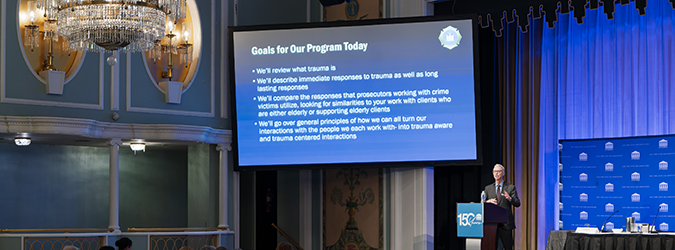
The program was part of the New York State Bar Association’s Annual Meeting.