What to Know Now That Medical Aid in Dying Will Soon Be Law
1.13.2026
After years of advocacy from the New York State Bar Association, Medical Aid in Dying is on the verge of becoming law in New York State. Gov. Kathy Hochul has announced that she will soon sign the bill into law. But what will obtaining and administering medical aid in dying look like for patients, physicians, and health care providers?
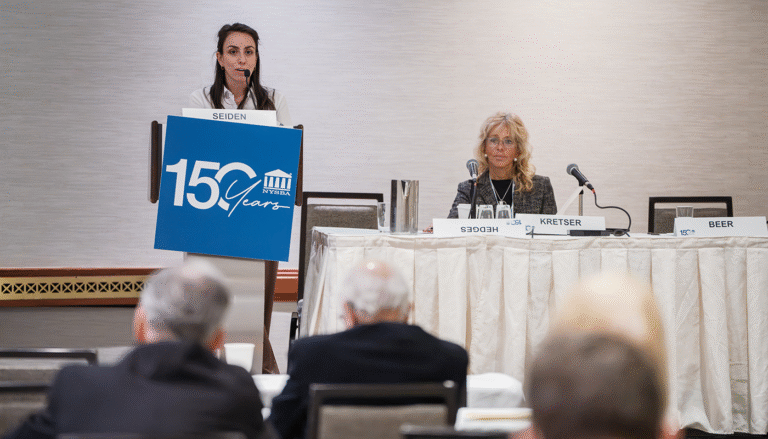
A very timely panel at the New York State Bar Association’s Annual Meeting – hosted by the association’s 50+ and General Practice sections – delved into the details of Medical Aid in Dying, and what attorneys should know about the soon-to-be law.
To qualify for medical aid in dying, a person must have a prognosis of six months or less to live. They must make both a written and oral request to their doctor – which must be recorded on audio or video. Two doctors must examine the patient’s physical condition, and a mental health professional must affirm that they are able to make an informed decision. The law then requires pharmacies to wait five days before filling the prescription for life-ending medication.
“MAID medications generally have to be made at compounding pharmacies,” said Emily Beer, bioethics teaching associate at Columbia University. “This is not something the average CVS or Walgreens will put together.”
In Vermont, only one pharmacy in the entire state will fill the prescription for medication.
Finally, the patient must be able to self-administer the medication by ingesting it. “Generally, this is accomplished by mixing the powdered medication with a liquid like apple juice and drinking it,” said Beer. “Of course, this means that the patient must be able to physically accomplish that action.”
There are alternatives to drinking the medication, such as using a feeding tube.
“The other important part about ingestion is that [it relies] on adequate gastrointestinal function,” said Beer. “Not everyone at the end of life will have the adequate GI function necessary. So clinicians need to keep an eye out on clinical red flags here that might indicate problems. Some clinical issues are solvable, but some are not. So self-administration and ingestion requirements will exclude otherwise eligible patients from participating in this.”
In addition, most health insurers do not cover medical aid in dying, and federally-funded programs like Medicare cannot pay for it. As most appointments and medications will have to be paid out of pocket, this creates a financial barrier for those seeking medical aid in dying.
Beer noted that while New York State will be the 13th state with some form of Medical Aid in Dying law, the law is more complicated compared to others. For example, no other state requires a mental health examination or a recording of a patient’s oral request.
“The governor was very conflicted, and she wanted to make sure that this law had more safeguards than any other law in the country,” said Rachel Krester, adjunct professor at Albany Law School and retired Albany City Court judge.
Krester also served on the New York State Bar Association’s Task Force on Medical Aid in Dying. The task force recommended that the association support the Medical Aid in Dying bill, which it adopted as policy.
“I think we really did make a difference thanks in part to our work,” Krester. “New Yorkers will no longer have to suffer needlessly at the end of their lives.”
Medical Aid in Dying will go into effect six months after Gov. Hochul signs the bill.