The Need for Reform in Schedule A E-Commerce Lawsuits
8.12.2025
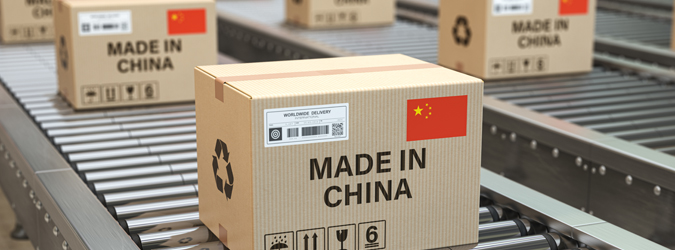
The rapid growth of cross-border e-commerce has reshaped global trade, with the United States emerging as a key market. E-commerce, the fastest growing area in the global economy, has shortened the distance between buyers and sellers,[1] especially since the outbreak of COVID-19.
However, this expansion has brought significant legal challenges, particularly in the realms of intellectual property protection. This article examines the impact of Schedule A cases – e–commerce sellers operating in the U.S. market. These lawsuits, commonly used to combat intellectual property infringement and counterfeit goods, often yield positive results for plaintiffs, such as asset restraints and preliminary injunctions that impose severe financial and operational burdens on sellers. As such, the law can be both a sword and a shield – intended to protect intellectual property, yet frequently exploited to suppress competition, leading to disproportionate harm to foreign sellers, many of whom are unaware of their legal rights or unable to defend themselves effectively. Because of the increase in suits against Chinese e-commerce sellers, some are considering pulling out of U.S. markets altogether.

Chinese cross-border e-commerce occupies a large sector of the United States market. Temu, owned by Pinduoduo, is a popular shopping marketplace known for its ultra-low prices. Temu claims a 17% market share within the discount store category, and annual sales were forecast to reach $54 billion in 2024.[2] Dissatisfied with selling products to the United States solely through e-commerce platforms, a significant proportion of Chinese cross-border e-commerce sellers are actively utilizing domestic platforms in the United States such as Amazon, eBay, and Walmart Marketplace. Recent reports suggest that nearly 63% of third-party sellers on Amazon’s U.S. platform come from mainland China or Hong Kong, while U.S. sellers make up 34.8%.[3] Besides China and the U.S., the United Kingdom, Canada, and Japan are the other most preferred markets for Chinese e-commerce sellers.[4] Several factors can keep shoppers away from buying from other countries. Recent studies show that 23% of consumers abandon their orders due to slow shipping, highlighting the crucial role of fast delivery in customer retention and satisfaction.[5]
Schedule A Cases
Schedule A cases get their name from the fact that the defendants are identified collectively in a “Schedule A,” rather than on the cover or in the body of the complaint.[6] Unlike the Digital Millennium Copyright Act, which only applies to copyright with a “notice and takedown” provision, Schedule A cases cover copyright, patent and trademark.
In Schedule A cases, the suit is filed under seal. As a result, defendants are not initially aware that a lawsuit has been filed against them, which is the intention.[7] The plaintiff then files an ex parte motion for entry of a sealed temporary restraining order to enjoin the offer for sale of the allegedly infringing products. Assuming the plaintiff’s motion is granted – which routinely occurs because the defendants are not provided the opportunity to oppose, for reasons to be explained – the plaintiff then provides the temporary restraining order, after it’s signed by the court, to online marketplaces. The platforms then close the relevant product listings and institute an asset freeze before the defendants even learn about the proceedings against them.[8]
The U.S. District Court for the Northern District of Illinois has seen a plethora of these cases. Ten years ago, Schedule A cases made up approximately 25% of cases filed in Illinois while 15 years ago, plaintiffs filed, at best, a handful of these cases each year.[9] In June 2023, 88% of trademark cases filed in the same district were against Schedule A defendants.[10]
Regardless of whether the plaintiff seller’s true purpose is to protect their intellectual property rights or to target competitors, Schedule A cases offer significant advantages. They take less time than other types of lawsuits and allow plaintiffs to sue multiple defendants simultaneously. Schedule A cases also offer significant cost savings. Filing a complaint in federal court requires a $405 filing fee per case. If a plaintiff were to sue each defendant individually, the total cost would be $4,050 for 10 defendants. However, by listing multiple defendants in a single Schedule A case, the plaintiff can pursue all claims under one filing, drastically reducing expenses.
As mentioned above, the plaintiff can file an ex parte motion for entry of a sealed temporary restraining order to enjoin the offer for the sale of the allegedly infringing products.[11] This means the court may grant a temporary restraining order without providing notice to any defendant listed on Schedule A, effectively preventing any defendant from opposing the order at this stage. Under standard civil procedure, it often takes about a month to complete a service of summons and receive the defendant’s answer or counterclaim.[12] In contrast, a temporary restraining order, as pre-trial injunction, can be requested immediately after the plaintiff files the complaint and may be granted within a week.
Courts Push Back
Why have Schedule A cases become an area of concern? The answer is that there is a growth in the number of Schedule A filings. For the last decade, the Chicago federal court has been the hub of this particular brand of intellectual property litigation. One prominent law professor has dubbed Schedule A cases as an “abusive” scheme to exploit procedural rules and capitalize on judicial deference to intellectual property owners.[13] For years, most Schedule A cases have been filed in the U.S. District Court for the Northern District of Illinois; of the 938 Schedule A cases filed in 2022, nearly 85% (794) were filed in Chicago.[14] The reason so many of these cases happen in Chicago is because the Northern District court
“has a broader jurisdictional qualification than many other federal courts, which allows Schedule A cases to reach a broader group of infringers. Specifically, the “minimum contacts” required for the Northern District of Illinois to assert jurisdiction over the defendant is met if the defendant ‘reasonably could foresee that its product would be sold in the forum.”
Because of its size and the “prevalence of the Chicago area to trade,” it would be reasonable to expect that a product would be sold in the Chicago area.[15]
However, not all Schedule A cases meet the required standard. On Nov. 4, 2024, U.S. District Judge John Blakey dismissed a copyright infringement case against 18 defendants that, by his reading of the plaintiff’s allegations, were not related to each other.[16] The mere allegation that defendants infringe the same intellectual property became insufficient for proper joinder under Rule 20(a)(2). Blakey cited a 2012 case, in which the judge noted that unless there is an actual link between the facts underlying each claim of infringement, independently developed products using differently sourced parts are not part of the same transaction, even if they are otherwise coincidentally identical,”.[17]
On Nov. 12, 2024, U.S. District Judge Sunil Harjani denied a different copyright owner’s motion for a temporary restraining order against 59 defendants holding that the plaintiff failed to allege a relationship among the defendants that would justify their joinder in a single lawsuit.[18] Many plaintiffs file Schedule A cases with extensive defendant lists, often exceeding 300 defendants. Under common legal principles, it is unlikely that all 300 defendants would satisfy the requirements for joinder. However, many plaintiffs still attempt this approach. Their motives may extend beyond protecting their intellectual property rights. They may also aim to target competitors by using restraining orders to freeze accounts and collect as many settlement fees as possible. This type of abuse places an increased burden on the federal courts.
Targeting of Chinese Cross-Border E-Commerce Sellers
As a dominant force in cross-border e-commerce, Chinese sellers are disproportionately involved in Schedule A litigation. It is common for the majority of defendants listed in a Schedule A case to be Chinese sellers, largely because only a small fraction of them appear in court to defend themselves.
One problem that puts Chinese e-commerce sellers at a disadvantage when their plaintiffs are in the United States is that personal delivery or mail service of a summons is impractical. As a result, the only feasible method of service is electronic, typically via email, after the plaintiff obtains court approval for alternative service. However, many sellers either fail to provide valid email addresses to e-commerce platforms or the plaintiff may attempt service using incorrect contact information. Consequently, securing default judgments against these defendants becomes relatively easy, reinforcing the strategic appeal of Schedule A filings.
According to a 2023 article in the MIT Technology Review, “it’s Chinese sellers who seem to be targeted the most often.” One New York-based attorney who has represented e-commerce sellers said “about 70% of his Schedule A defense clients are from China, while fewer than 10% are based in the United States.”[19]
Market competition is another contributing factor. China is a manufacturing powerhouse and a major exporter of goods around the world. The low cost of labor and materials, government support, and intense competition among manufacturers are some of the main reasons why Chinese products are often cheaper than those made in other countries.[20] As a result, many consumers prefer to purchase goods online from Chinese sellers to take advantage of these lower prices. Each year hundreds of millions of packages, mostly from Chinese platforms, are sent directly to American consumers eager to take advantage of significantly lower prices on clothing, electronics and other products.[21] Schedule A litigation can, to some extent, serve as a mechanism to curb this growing trend.
Schedule A litigation has effectively become a weapon used to target Chinese cross-border e-commerce sellers, contributing to instability in the e-commerce market. Many sellers – particularly small businesses and individual operators – feel frustrated and helpless when their stores are shut down, often without prior notice or a meaningful opportunity to defend themselves. In many cases, these sellers believe they have done nothing wrong, yet they face severe consequences, including asset freezes and reputational harm. “We have many links, and due to this issue with one link, their lawyer applied to freeze all links in our store, freezing the entire store,” said one Chinese Amazon seller, expressing one of their frustrations over the legal actions taken against their store. They received a temporary restraining order, followed by a preliminary injunction. The seller emphasized that freezing a single link should not lead to the entire account being frozen, as it causes significant operational losses.[22]
Consequently, many Chinese cross-border e-commerce sellers are considering withdrawing from the U.S. market and redirecting their operations to the European Union and other regions. This trend not only affects the sellers but also represents a potential loss for the U.S. economy, as it may lead to reduced product diversity and competition in the e-commerce sector.
Potential Solutions
To limit abuse, one effective approach is to hold accountable those who initiate litigation with ulterior motives. This can be accomplished through the imposition of monetary fines and disciplinary sanctions. Such measures would help deter frivolous filings and reinforce the integrity of the legal process.
For example, consider a Schedule A plaintiff who obtains a temporary restraining order and uses it to freeze the assets of numerous defendants, but later, during the preliminary injunction stage, several defendants appear and successfully oppose the motion. After the court denies the motion for preliminary injunction, the judge could impose sanctions on the plaintiff and their counsel. These sanctions may include monetary penalties – such as requiring the plaintiff to compensate a percentage of the defendants’ financial losses resulting from the improperly granted restraining order – as well as disciplinary actions for misuse of the litigation process. The prospect of such severe penalties would compel potential abusers to think twice before initiating litigation in bad faith.
In addition, judges could apply stricter standards in Schedule A cases to help curb abuse. As discussed above, some judges have already denied motions for temporary restraining orders on the basis of improper joinder[23] – a proper and effective approach. Courts should require plaintiffs to submit specific factual evidence demonstrating a coordinated scheme among defendants, rather than relying solely on screenshots of similar product listings. Plaintiffs should also be required to disclose whether they have previously initiated litigation involving the same or similar intellectual property and to report the outcomes of those cases. This would help the court identify repeat filers and detect patterns of abusive litigation.
Furthermore, a regulatory referral mechanism could be established so that repeated misuse by the same plaintiff or law firm would prompt an investigation or formal warning from agencies such as the U.S. Patent and Trademark’s Office of Enrollment and Discipline. In serious cases, the agency could consider suspending or invalidating the plaintiff’s trademark or patent registration as a disciplinary measure. This would serve as a strong deterrent against abuse while also reducing the burden on the judiciary.
Then, e-commerce platforms should play a more active role in protecting defendants in Schedule A cases. As noted above, most cross-border e-commerce sellers are located outside the United States, and email is typically the most appropriate method of service. Therefore, platforms should take greater care in verifying that sellers’ contact information – particularly email addresses – are accurate and up-to-date. Ensuring timely service allows defendants the opportunity to appear in court early and exercise their right to oppose motions for preliminary injunction. Early participation increases the likelihood that weak or unsubstantiated motions will be denied, helping to prevent plaintiffs from abusing the Schedule A process to gain an unfair advantage.
Finally, sellers themselves must take greater responsibility. They should proactively verify whether any of their products infringe existing U.S. trademarks, copyrights, or patents before listing them for sale. When possible, sellers are encouraged to register their own trademarks and patents with the United States Patent and Trademark Office, and their copyrights with the U.S. Copyright Office, to protect their rights and reduce the risk of unintentional infringement. At a minimum, sellers should ensure that they provide a reliable and regularly monitored email address to the platform, so they can be reached in the event of legal service.
The excessive use of Schedule A cases has challenged the courts to ensure procedural fairness and enforcement. Addressing these issues requires a coordinated effort across the legislative, judicial and e-commerce sectors. Ultimately, these reforms aim to strike a more equitable balance between protecting intellectual property rights and safeguarding the interests of legitimate cross-border sellers.
Zhiwei Hua is an attorney admitted in New York and Washington, D.C., where he concentrates his practice on intellectual property and cross-border e-commerce litigation. He frequently represents clients in trademark infringement actions in federal courts and provides counsel to Chinese companies on U.S. regulatory compliance. He recently received his J.D. from Case Western Reserve University School of Law.
Endnotes:
1 Feng Ding, Jiazhen Huo, and Juliana Kucht Campos, The Development of Cross Border E-Commerce, International Conf. on Transformations and Innovations in Mgmt., 487–500 (Sept. 2017).
2 Shyam Gotham, How Shein and Temu Are Disrupting the U.S. E-Commerce. CrossDock Insights Oct. 16, 2024, https://crossdock.hopstack.io/p/shein-and-temu.
3 Dave Bryant, How Chinese Sellers Are Manipulating Amazon in 2025, EcomCrew, July 2, 2024, https://www.ecomcrew.com/chinese-sellers-manipulating-amazon/.
[4] Koen van Gelder, Cross-Border E-Commerce in North America: Statistics and Facts, Statista, Apr. 15, 2025, https://www.statista.com/topics/8853/cross-border-e-commerce-in-north-america/#topicOverview.
[5] The Cost of Slow Shipping: 23% Cart Abandonment Rate, Digital Commerce 360,June 17, 2024), https://www.digitalcommerce360.com/2024/06/17/the-cost-of-slow-shipping-23-cart-abandonment-rate.
6 Marko R. Zoretic and Jack Hendershott, ‘Schedule A’ Cases: A Powerful Tool for Enforcing Design Patents, N.Y.L.J., May 15, 2023, https://www.law.com/newyorklawjournal/2023/05/15/schedule-a-cases-a-powerful-tool-for-enforcing-design-patents/?slreturn=20241219-23905.
[9] Concerns Emerging on TM Cases Against Undisclosed Parties, Law360 (June 21, 2023), available on Lexis, https://plus.lexis.com/api/permalink/4a40a094-ccd5-4f8e-830a-6f6b96da91d4/?context=1530671
[11] Zoretic and Hendershott, supra n.6.
13 Alison Frankel, Chicago Judges Are Starting To Push Back Against ‘SAD’ Scheme in IP Cases, Reuters, Nov. 19, 2024, https://www.reuters.com/legal/litigation/column-chicago-judges-are-starting-push-back-against-sad-scheme-ip-cases-2024-11-19.
[14] Zeyi Yang, The Counterfeit Lawsuits That Scoop Up Hundreds of Chinese American Sellers at Once, MIT Technology Review, June 20, 2023, https://www.technologyreview.com/2023/06/20/1075088/chinese-amazon-seller-counterfeit-lawsuit.
[15] Using ‘Schedule A’ Litigation To Combat Online Trademark Infringement, ZVMLaw, https://zvmlaw.com/blog/using-schedule-a-litigation-to-combat-online-trademark-infringement.
[17] Estée Lauder Cosmetics Ltd. v. P’ships & Unincorporated Assns. Identified on Schedule A, 334 F.R.D. 182 (N.D. Ill. 2020), quoting In re EMC Corp., 677 F.3d 1351, 1359 (Fed. Cir. 2012).
[19] Yang, supra n. 14.
[20] Profitable Products: How To Get Cheap Products from China?, Supplyia (Jan. 1, 2025), https://www.supplyia.com/how-to-get-cheap-products-from-china/.
[21] Eunice Yoon and Jennifer Jett, The U.S. Is Cracking Down on Cheap Chinese Goods Loved by American Shoppers, NBC News (Sept. 24, 2024), https://www.nbcnews.com/news/world/us-cracking-cheap-chinese-goods-temu-shein-rcna171605.
[22] Cathy Li, Suing by Email: A Legal Scheme Targeting Chinese Sellers, AsiaIP, Dec. 31, 2024,
https://asiaiplaw.com/article/suing-by-email-a-legal-scheme-targeting-chinese-sellers.
[23] Frankel, supra n. 13.